
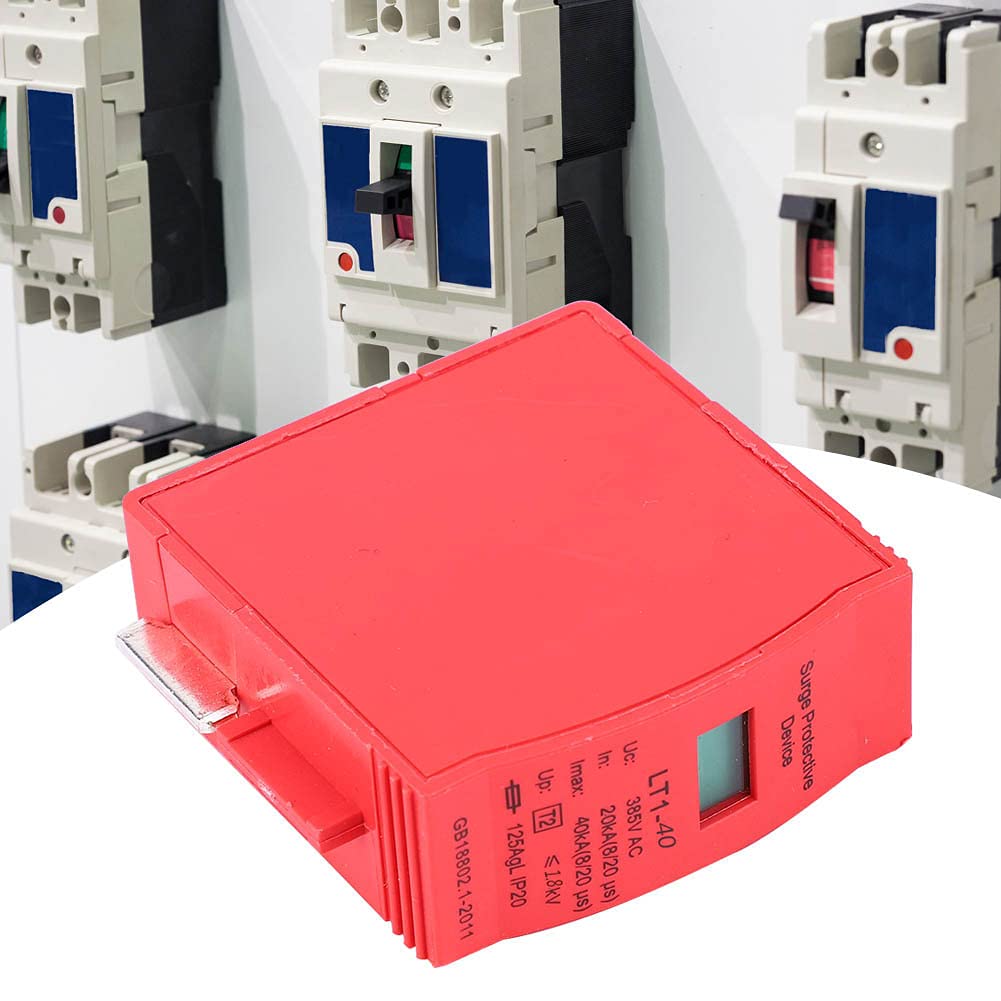
Surge Protective Devices (SPDs) are crucial for safeguarding electrical systems from transient overvoltage’s caused by lightning strikes, power grid fluctuations, and internal switching events. Properly selecting and installing SPDs for single-phase and three-phase systems requires understanding the earthing system and the SPD type suitable for the application.

Types of SPDs
SPDs are categorized into three main types based on their intended placement and application:
Type 1 SPD
- Purpose: Designed to protect against high-energy surges, such as those caused by direct lightning strikes.
- Installation: Installed at the main service entrance before the main circuit breaker, between the utility and the building’s electrical system.
- Use Case: Commonly used in areas prone to lightning strikes or where buildings have external lightning protection systems (e.g., lightning rods).
Type 2 SPD
- Purpose: Protects against residual surges that pass through Type 1 SPDs or are generated internally by switching operations.
- Installation: Installed at the distribution board or subpanels, after the main circuit breaker.
- Use Case: Suitable for protecting sensitive equipment and appliances within the building.
Type 3 SPD
- Purpose: Provides localized protection for individual devices.
- Installation: Installed near the load (e.g., power strips or outlet-level SPDs).
- Use Case: Protects specific devices such as computers, TVs, and medical equipment.
Single-Phase vs. Three-Phase Applications
The choice of SPD configuration depends on whether the system is single-phase or three-phase, as these systems differ in structure and voltage levels.
Single-Phase Systems
- Configuration: Typically involves one live wire (L), one neutral wire (N), and an earth connection (E).
- Common Voltage: 120V or 230V.
- SPD Selection: Single-phase SPDs are straightforward to install, requiring connection between L-N, L-E, and N-E, depending on the earthing system.
Three-Phase Systems
- Configuration: Involves three live wires (L1, L2, L3), neutral (N), and earth (E).
- Common Voltage: 400V between phases or 230V between phase and neutral.
- SPD Selection: Three-phase systems require multi-pole SPDs capable of handling surges across all live wires, neutral, and earth.
Earthing Systems and SPD Applications
The earthing system of an electrical installation influences the placement and connection of SPDs. Common earthing systems include TN-S, TT, and TN-C-S systems.

TN-C-S (Terra Neutral – Combined and Separate)
This system is also known as the Protective Multiple Earthing (PME) system.
In a TN-C-S system, the neutral (N) and earth (PE, protective earth) conductors are combined into a single conductor (PEN, protective earth-neutral) in the supply network and then separated at the consumer’s installation.
TT (Terra-Terra)
In a TT system, the consumer provides their own local earth connection using an earth electrode, separate from the supply network’s earthing system.
TN-S (Terra Neutral – Separate)
In a TN-S system, the earth (PE) and neutral (N) conductors are separate throughout the entire supply network.
Best Practices for SPD Installation
- Coordination of SPDs:
- Use a cascading approach with Type 1 SPDs at the main service entrance and Type 2 SPDs in distribution panels.
- Type 3 SPDs can provide additional localized protection for sensitive equipment.
- Earthing Considerations:
- Ensure the earthing system is well-designed and maintained, as SPD effectiveness depends on a low-impedance earth connection.
- Verify compliance with local regulations regarding earth resistance values.
- Voltage Ratings:
- Select SPDs with voltage protection levels (Up) that align with the insulation withstand capability of the system.
- For three-phase systems, ensure SPDs can handle the phase-to-phase and phase-to-earth voltage levels.
- Regular Maintenance:
- Inspect SPDs periodically to ensure functionality, as they degrade over time and may require replacement after significant surge events.
Conclusion
SPDs play a vital role in protecting electrical systems from transient overvoltage’s. Selecting the appropriate SPD type and ensuring compatibility with the earthing system are critical for effective surge protection in single-phase and three-phase applications. By adhering to best practices and maintaining a robust earthing system, facilities can minimize damage to electrical infrastructure and sensitive equipment, enhancing safety and operational continuity.